


I grew up in a small, white, religious Canadian town in the 90s. Attitudes towards sex work were, to say the least, not good.
I remember kids using ‘whore’ as a deeply harmful insult. Prostitutes were often the butt of jokes; so much so that there was a whole genre of jokes called ‘dead hooker jokes’. Mind you, dead baby jokes were also VERY common, and I laughed at them.
We all laughed at them, secretly fearing ever having that judgment turned on us.
The public discourse around sex work seemed to have hit a high point a few years ago, elevating sex work to a radical feminist profession. Not everyone felt that way about it, but even just the fact that people migrated to saying sex work instead of whore, prostitute or hooker, speaks volumes.
Let’s take a look at sex work, what it is, what it was, and what it potentially could become.
The Oldest Profession
We don’t really know who the first sex worker was because this line of work likely predates recorded history, but the first recorded mention of prostitution dates back to 2400 BCE. Though much debated, ancient sex work appears to have been tied to fertility rites and may have been considered sacred.
Throughout history, huge advancements to human and labour rights, healthcare and sanitation, and economic prosperity have been brought about because of sex work. Feminist, LGBTQIA+, labour, bodily autonomy, and consent movements have all had sex workers on the front lines. Sex work brought in routine medical screenings, digital payment privacy protections, and was even a major player in civilising the wild west.

While laws and public opinion around sex work have varied across time, most civilisations have accepted it as a necessary part of society.
Without it, it was feared that men would wreak havoc in uncontrolled ways. Perhaps overly conservative laws regarding sex work could be to blame for the rise of incel culture. Despite its persistence throughout all of human history, sex work remains stigmatised and conflated with sex trafficking and other sexual exploitations.
Sex as work – the legacy of the Scarlet Harlot
The term ‘sex worker’ was introduced by the talented and creative Carol Leigh, also known as the Scarlet Harlot, who advocated for sex workers’ rights and legitimacy as labourers.

This was at the end of the 1970s and was then popularized in the 1980s. This led to legal changes regarding sex work that were slowly implemented up into the mid-1990s.
Perhaps in response to these advancements, the following decade or so saw a lot of jokes about sex work. Many crime shows featured the murder and mistreatment of sex workers, and not everyone was sympathetic. The public attitudes may have been murky and varied, but at least it was getting attention.
In 2015, Amnesty International, along with over 200 sex worker organisations, advocated for the global decriminalisation of sex work. I remember this time as an age of renewed support for sex workers. This was when I was first introduced to the movement, and I wasn’t alone. Many people were newly awakening to this movement and getting on board.
Proposed amendments to UK law that exacerbate harm to sex workers
Currently, though Belgium is expanding the labour rights of sex workers, there are proposed amendments to criminal law in the UK that threaten to push sex workers further into unsafe conditions. These cannot be allowed to pass (cue Gandalf).
The pandemic has already pushed sex workers into unstable living conditions through reduced demand for their services, fears around safety measures, and a lack of support for the most vulnerable and marginalised groups. For many, the only way to survive was to move their work online. The new bill targets online sex work, despite a major 2018 UK study that found that the internet made sex work much safer. It also includes vague wording that could prevent charities from providing support like free condoms and healthcare services, or even loved ones from being in contact with sex workers.
We already have an example to show how damaging these changes can be. In 2015, Northern Ireland criminalised the purchasing of sexual services, and in the years following this change, reported assaults against sex workers increased by 225%. This approach is harmful and does nothing to address the root causes of sex work: a lack of financial security by other means.
Why does sex work exist?
According to the International Union of Sex Workers, many of the reasons why people enter into sex work come down to economics. Poverty, debts, unemployment, and the allure of making good money for a change are major motivators to engage in sex work. With the cost-of-living crisis and competitive job market, more people are feeling like sex work is an appealing option.
But it’s not just about the money. Not for everyone.
On the scary side, we have coercion, peer pressure, and deception by loved ones.
On the empowering side, there are sex workers taking charge of their lives, exploring their sexualities, and profiting from something that gives them joy: sex. Yes, sex workers feel the weight of societal stigma and often suffer at the hands of clients, family, and a community that does not respect them. But that’s not a commentary on the inherent goodness or badness of the job.
When people are not forced into it and don’t experience stigma or judgment, some still choose to become sex workers. Under those circumstances, this work is akin to therapy, or even spiritual healing.
Sex as healing
Most, if not all, of the world is greatly impacted by sexual violence. Those of us assigned female have all experienced some form of this, many of us experiencing extreme abuse. Many assigned male have also experienced sexual abuse, especially those in the queer community. A staggering proportion of children are victims of sexual abuse, some young enough that their minds deleted the file, but their bodies remember.
Healing comes in many forms, and it is particularly powerful to heal in the context of the harm. Sex has the capacity to touch those deep wounds, bring them to the surface, and offer a chance to feel the feelings in a safer context. A carefully crafted session can release suppressed emotions and even transform them into something good!
Not all sex workers are skilled in this type of transformational healing, but ones who are do exist. Not everyone who supports this type of transformational healing is paid for their support. Whether financial compensation is involved or not, we as a human society need to confront sexual trauma if we want to step into our collective liberation.
Post-capitalism and the idea of sex as work
Sex worker has the same energy as a support worker, or a letter carrier, or a firefighter. It’s non-gendered, non-emotive, and descriptive. Great. In a world where we all have jobs and we make money to live from those jobs, it fits well.
But is that where we want to go?
We are transforming into a post-capitalist world. More and more of us are reframing how we think about life and the systems we’ve built to sustain humanity. More and more of us are questioning the very idea that we must work for a living. Sure, we need to be clothed, fed, and housed, but clocking in from 9 to 5 isn’t really necessary.
As necessary as it has been to establish sex work as a legitimate profession worthy of respect, it’s still within the capitalist frame. It’s giving black Harvard graduates energy, revolutionary and necessary for a time, gaining power and legitimacy in the eyes of the oppressor. But it can’t stop there. The goal is liberation.
So then, in a post-capitalist world, what becomes of sex work?
Infinite lover
Whether one is getting paid or not, the public perception of women who have lots of sex with different people has been pretty judgmental for a long time. With the rise of slut walks and body positivity, a lot of that shame and judgement was released, but it persists. As public discourse has shifted to platforms with more right-wing and fascistic views over the last decade, we risk losing the advancements we’ve gained.
There is a phrase that was used in the Gay Liberation Movement in New York City that beautifully encapsulates a revolutionary vision for a future centered on sex. “An army of lovers cannot fail”.
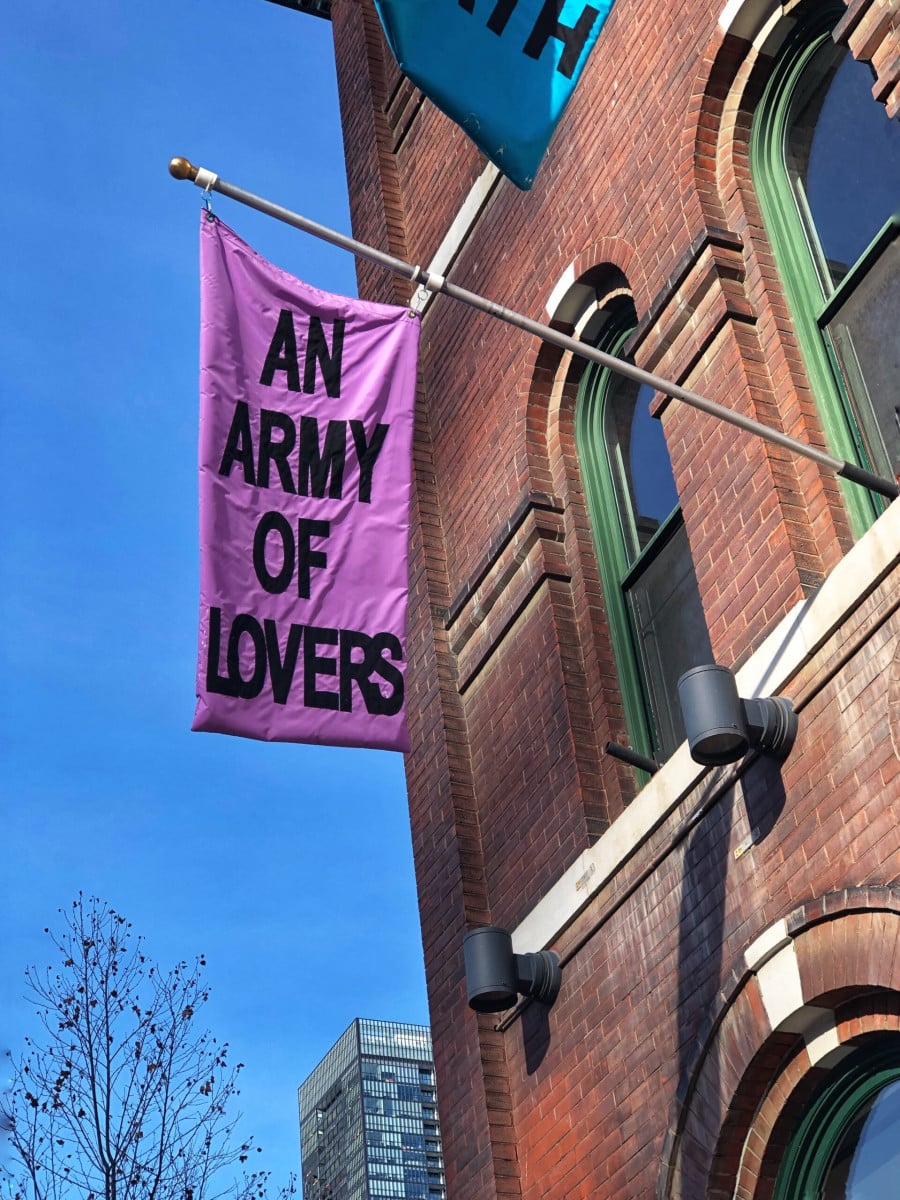
When we think of the depth of love that transformational sexual experiences can foster, it’s easy to see the power that could result from genuine, loving sex work.
At its best, sex work is about intimacy, release, acceptance, and joy. It can allow people to be seen on a deep level, and to be loved on that level as well. A sex worker may see the most vulnerable parts of their clients, learn their deepest desires, fears or secrets, and gain wisdom that few others would access. In the ashes of capitalism, this wisdom becomes gold.
Just as queerness and trans identities can be viewed as sources of sacred wisdom from an expanded experience of life, so too can sex work. Sexual transformation is and always will be needed. Sex matters. It is powerful. Leading people through that experience is a role to be respected. And those who use it wisely have much to teach us.
But first, solidarity
As long as there is paid work, there will be paid sex work. It is as valid as any other source of income and, under the right conditions, it is sacred.
As long as there are those who seek to control others, there will be those who seek to suppress sex work. On Monday, June 2nd, London will stand with sex workers to oppose these harmful changes. I will be among them.
Please continue to stand with sex workers. There may come a day when sexual liberation for all alleviates the need for sex work, but until that day, we need to stand together in solidarity.