


Desiring the Impossible
Story of O is a BDSM classic that has been reinvented many times, in many ways, for many years.
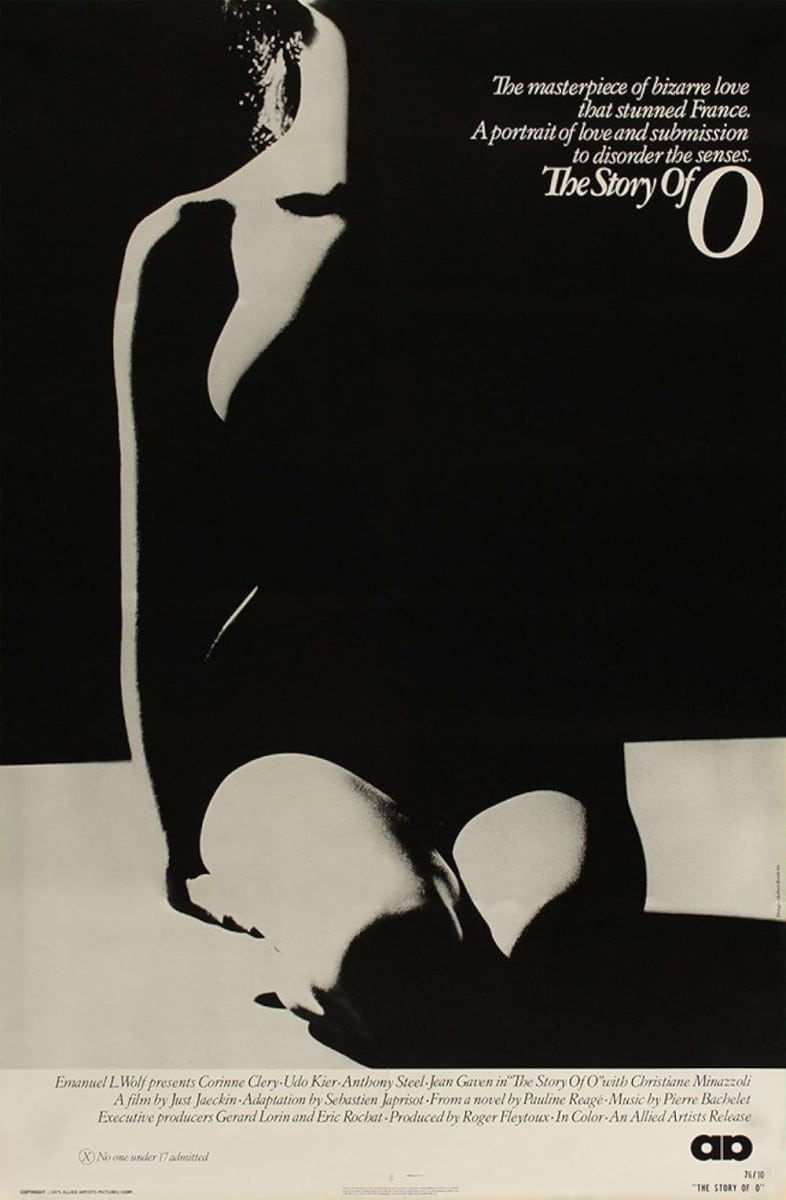
There was a legendary 1975 film with a major Bond girl. It was turned into a 10-part series. Artists have interpreted this story through visual art , music and theatre. Even the artist Marina Abramović may have drawn inspiration from this story with her Rhythm 0 performance where she invites the public to do anything they want to her using the 72 objects on the table next to her.
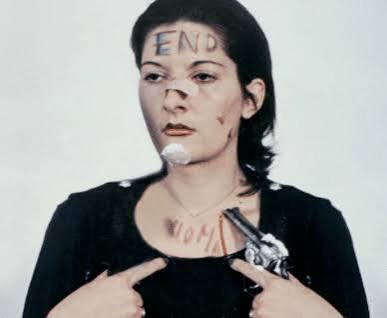
If you haven’t heard of it yet (don’t worry, I hadn’t either until about 2 weeks ago), you might enjoy this article the most. I’m going to go over the story itself (with spoilers!), the context in which it was made, and why we need it now.
The Story of O
The story starts somewhat abruptly. O and her lover, René, are on a date, and he takes her to a place called Roissy (roi = king, ici = here ?). René prepares her by instructing her to remove her bra, garter, and underwear, among other things, and tells her to go inside and do whatever she is asked. Inside and blindfolded, she is further stripped, and a group of unknown men do what they want with her. They stick their dicks in every Orifice. They whip her. They make her bleed.
She is told that she is a slave and may be used by any man who belongs to this secret society, at any time — even outside the place in her day-to-day life. She is to stay Open.
She is then introduced to Sir Stephen, René’s stepbrother, who ultimately becomes O’s master. He brings her to a different place where she is introduced to Anne-Marie, who has her own slaves, like the men. Eventually, O is instructed to bring her new love interest, the model Jacqueline, whom O has photographed professionally, to Roissy. Her 15-year-old sister asks to come as well. Then, O is brought to the Commander and presented at a party nude apart from an owl mask (and her various marks of ownership). After that, she asks for her own death, and Sir Stephen acquiesces to her request.
The Anti-Colonial roots behind its creation
This story was written by a woman, but not just any woman; this woman had been previously writing for an anti-colonial publication of the French Resistance in Paris. She was fighting fascism with her subversive words (and possibly other ways, as well) a decade before she wrote this.
When Histoire D’O was written, it shocked people and caused quite a stir. Only 600 copies were printed, but it quickly caught on and enraged feminists and moderates alike. It was 1954, and the conservative housewife ideal was shaping the lives of women everywhere. Censorship was cracking down in England, but a loophole in French censorship laws allowed English texts to remain safe from confiscation, so British tourists would go to Paris to get all their kinky books.
Originally, this novel wasn’t meant for the public. It was meant for the author’s much older and married lover who was a big fan of the Marquis de Sade, and had been embroiled in legal troubles since publishing his works years earlier. He had also been publishing the resistance texts that his lover had been writing. These were longstanding anti-colonialists who were fighting literal Nazis.
Who is Pauline Réage?
Pauline Réage is a pen name that the author used for this salacious text. I say “a” and not “the” because she wrote under the name Dominique Aury as well, particularly when she was writing for the resistance. She didn’t want to endanger her family by using her real name, Anne Desclos.
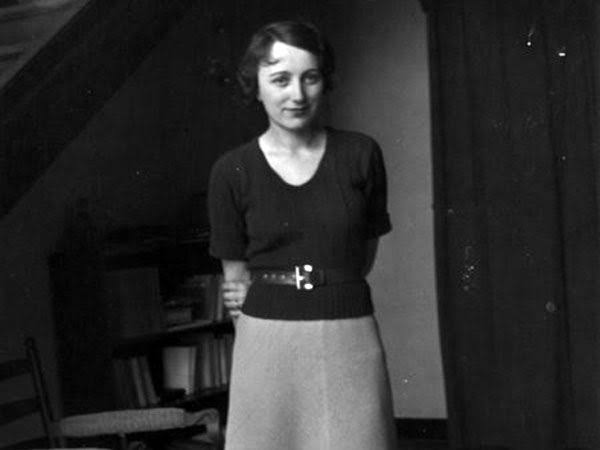
In fact, no one even knew who Pauline Réage was until 1994, 40 years after she wrote Histoire D’O. She had been 47 when she wrote it and she had spent her life in bilingual literary circles. Her father taught English, and he instilled in her a love for many great writers. She was very aware of the craft of writing, and though this book was written in only 3 months, there are so many delicious layers to interpret. Her connections with the intellectual elite of Paris of the time also make it quite likely that she would have been a member of a secret society, and would have definitely been influenced by hermetic orders like The Golden Dawn, steeped in magical symbolism.
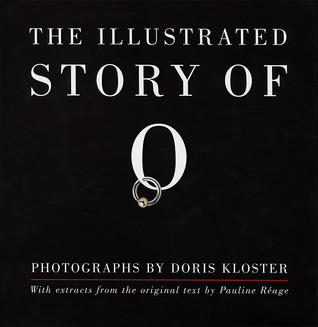
She lived until the age of 90, and perhaps in memoriam, an Illustrated Story of O was released in the year 2000 by the photographer, Doris Kloster (currently exhibiting in Germany as part of an exhibit on sex work ), which is well worth checking out with all its late 90s/Y2K aesthetic.
A dream, a fantasy, un rêve
I came across a quote from Réage, “Who am I, finally, if not the long silent part of someone, the secret and nocturnal part… which communicates through the subterranean depths of the imaginary with dreams as old as the world itself – ?”
To interpret a fantasy, we must approach it like a dream. She is placing her lover in the position of a king (Roi-ici), divinely appointed, yet he is responsible for introducing her to a world of pain. She places herself entirely in his care and control, and trusts that this is what she wants. She experiences all the pain and cruelty he can throw at her through others. It is their base instinct to be violent towards her, and she receives it all.
Though it is painful in the moment, she is proud of herself afterwards. Seeing her battle wounds, knowing she has absorbed and transformed all of that pain, she is self-satisfied. First, she accepts out of love for René, then she accepts Sir Stephen’s violence out of obedience, and she grows to love him. She loves him not because he loves her, but despite his lack of love for her. She then actively harms herself and others, for the sake of loving him until she is transformed into a wise owl.
This story is about how one is transformed through the pursuit of love and devotion.
Consenting to the status quo
Throughout the book, O is frequently reminded that she can leave any time she wants. In the foreword, there is discussion of how when enslaved people have been given the opportunity to be free, some people will choose to stay enslaved. We who live within white-cis-hetero-capitalist-patriarchy are, in a way, enslaved. Women who are legally married, particularly in the 1950s, could be seen as consenting to a form of slavery as well.
This story explores the fantasy of someone who has fought, and likely sacrificed and suffered, for freedom. For liberation. Knowing the pain and difficulty of that fight, she fantasised about the opposite. Not because she wanted that to be the reality, but because she understood the assignment. Writing to her lover about torture, for her, hinged on unrequited love from someone who owned her.
We see some version of this all the time. Victims stay with abusers because they fear the unknown.
We often accept a subpar reality because we can’t easily imagine an alternative. All the time, we are consenting to our own destruction as we remain complicit with the capitalist war machine, the powerful pedophiles, and the destruction of our own home planet.
Subjugation of women?
When Histoire D’O was published, feminists got up in arms about the glorification of violence against women, and I get why. They’re not wrong; it’s full of violence against women and presents it as what women want. But this book was never meant to be taken at face value.
Jameela Jamil once said in an interview that men are the target of patriarchy, and I agree. We get so caught up in the pain and oppression of womanhood that we sidestep the fact that patriarchy was built on the bodies of men. The way men are hurt by the status quo, and have been for centuries, means that men have so much hurt that they were never allowed to feel. Never given the space or skills to process. Some have miraculously sorted themselves out, but the game is heavily stacked against them.
When you’re overwhelmed by pain, your body shuts down. One way to cut, quite literally, through the numbness into feeling again is through subjecting yourself to pain. This is often why people begin to self-harm. But if that doesn’t work — then what? You begin to hurt others, perhaps with the subconscious hope that their screams might bring you to feel something. Maybe the satisfaction in another’s pain could reside in the assurance that someone still can feel. And in a way, that is hope.
Addiction to pain
Addiction is often created through intermittent and unpredictable exposure to some sort of reward. Every avoidant fuck boy exploits this fact when he ignores a woman for days, weeks or more at a time, and then pops back in with tantalising love and affection, on his terms.
This pattern, paired with sensation, prolongs pleasure and teases it seductively before ever giving release. As far as I can tell, O never orgasms. Never feels pleasure apart from its attachment to pain. What little erotic touch she receives, no matter how barbaric, becomes appealing because we do need love. We do need physical contact. And if all we experience is a few minutes of violation in the space where love should reside, that becomes what love feels like to us, and we crave it.
The Marquis de Sade was about the pleasure that destroys, and what is more destructive than the current world order? The wasteful ways of living, the petroleum in our beauty products, the violence in our foods; to indulge in the mainstream is to consent to not only your own destruction, but the destruction of others, too, and we’re addicted to it.
You can leave any time you want.